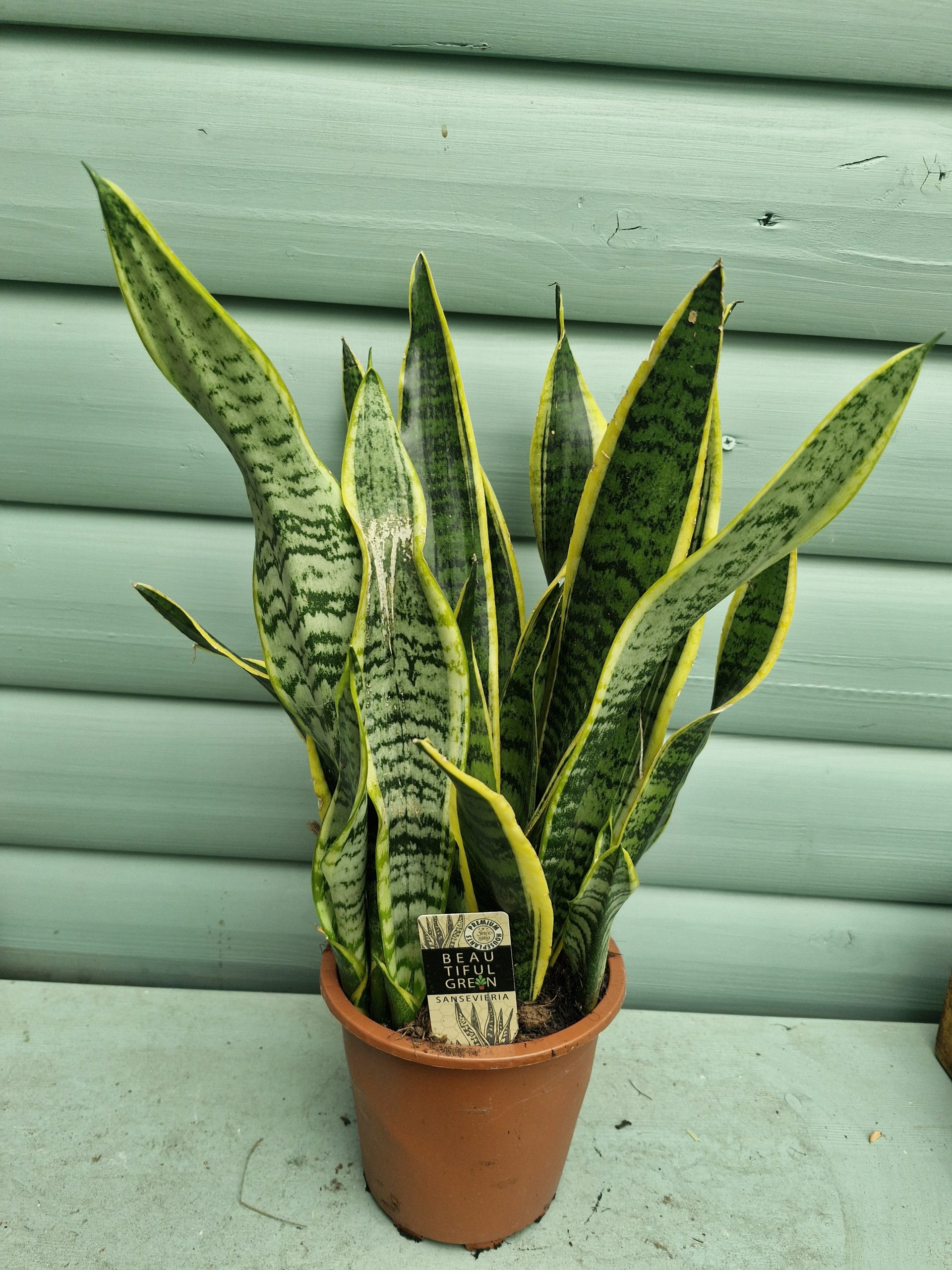



Sansevieria ‘Laurentii’

14.95

Ideally, place your snake plant in a bright spot, out of direct sunshine. It will cope in a dark corner but may lose some of the attractive variegation on the leaves.

Snake plants don’t need much water – just water whenever the soil is dry. Make sure you let the water drain away fully – do not let the plant sit in water as this may cause the roots to rot. Snake plants need very little water in winter.

Feed once a month from April to September. Wipe the leaves occasionally, to prevent dust building up. Be careful not to damage the leaf tips – this will stop the plant growing. Snake plants can cope with draughts and dry air, and don’t need misting.


Out of stock

Category:

You can keep your snake plant in its original pot after you've brought it home, unless its roots are bursting out of the bottom of the pot. Snake plants are slow growers so won't need repotting that often. If your plant has outgrown its pot, repot it in spring into a slightly larger one. Use house plant or cactus compost, or ordinary peat-free multi-purpose compost with some horticultural grit added. If your snake plant is tall, you might want to plant it in a heavy pot, to stop it toppling over.

Snake plants don't need much water – just water whenever the soil is dry. Make sure you let the water drain away fully – do not let the plant sit in water as this may cause the roots to rot. Snake plants need very little water in winter.

Feed once a month from April to September. Wipe the leaves occasionally, to prevent dust building up. Be careful not to damage the leaf tips – this will stop the plant growing. Snake plants can cope with draughts and dry air, and don't need misting.


How to propagate a snake plant

You can propagate snake plants by taking leaf cuttings, but the simplest method is by dividing. Using a knife, carefully cut away a leaf and a piece of root, and plant it up in a small pot of compost. Water in well and put the cutting in a bright spot, out of direct sunlight.

You can keep your snake plant in its original pot after you’ve brought it home, unless its roots are bursting out of the bottom of the pot. Snake plants are slow growers so won’t need repotting that often. If your plant has outgrown its pot, repot it in spring into a slightly larger one. Use house plant or cactus compost, or ordinary peat-free multi-purpose compost with some horticultural grit added. If your snake plant is tall, you might want to plant it in a heavy pot, to stop it toppling over.

Snake plants don’t need much water – just water whenever the soil is dry. Make sure you let the water drain away fully – do not let the plant sit in water as this may cause the roots to rot. Snake plants need very little water in winter.

Feed once a month from April to September. Wipe the leaves occasionally, to prevent dust building up. Be careful not to damage the leaf tips – this will stop the plant growing. Snake plants can cope with draughts and dry air, and don’t need misting.


How to propagate a snake plant

You can propagate snake plants by taking leaf cuttings, but the simplest method is by dividing. Using a knife, carefully cut away a leaf and a piece of root, and plant it up in a small pot of compost. Water in well and put the cutting in a bright spot, out of direct sunlight.