

Characteristics
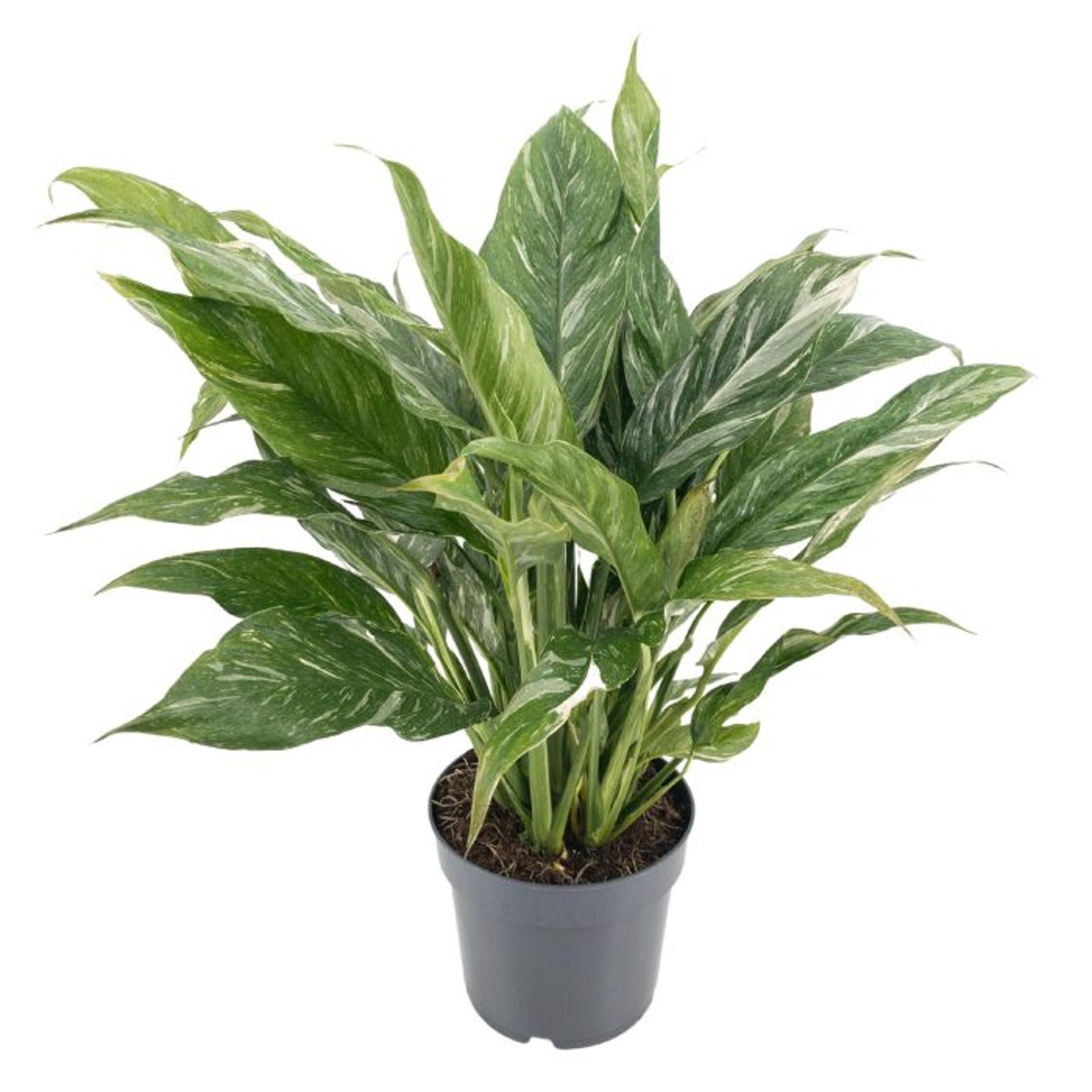
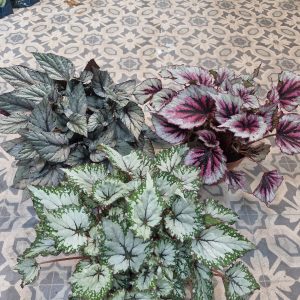
- Foliage: The plant features lush, glossy, lance-shaped leaves with distinct splashes and streaks of white or cream, creating a unique pattern on each leaf.
- Flowers: It produces the characteristic white spathes (flower bracts) with a central spadix, which can last for several weeks under optimal conditions.
- Growth Habit: It has a bushy, upright growth habit and typically reaches an ultimate height of around 50–80 cm.
- Air Purifying: Like other peace lilies, this variety is known for its ability to filter common indoor air toxins like formaldehyde and ammonia, contributing to a healthier environment.
- Toxicity: All parts of the plant are considered mildly toxic if ingested and should be kept away from children and pets.
Care Guide
- Light: Prefers bright, indirect light to maintain its vibrant variegation. It can tolerate lower light levels, but this may result in less pronounced variegation and fewer flowers. Avoid harsh, direct sunlight, which can scorch the leaves.
- Watering: Keep the soil evenly moist but not waterlogged. The plant is quite communicative and its leaves will dramatically droop when it is thirsty, perking up quickly after a thorough watering. Allowing the top layer of soil to dry out slightly between waterings is a good practice.
- Temperature & Humidity: Thrives in average household temperatures between 18–24°C (64–75°F). It enjoys moderate to high humidity; occasional misting or placing it on a pebble tray can help.
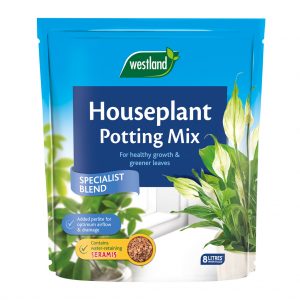
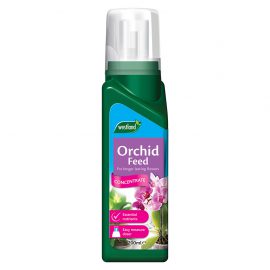
- Soil & Fertilizer: Use a well-draining, fertile indoor potting mix. Feed monthly with a balanced liquid fertilizer during the spring and summer growing season, pausing in winter.
- Pruning & Repotting: Remove any yellow or damaged leaves at the base of the stems. Peace lilies prefer to be slightly pot-bound, so repotting is typically only necessary every 1–2 years or when it needs watering more than once a week due to wilting.