
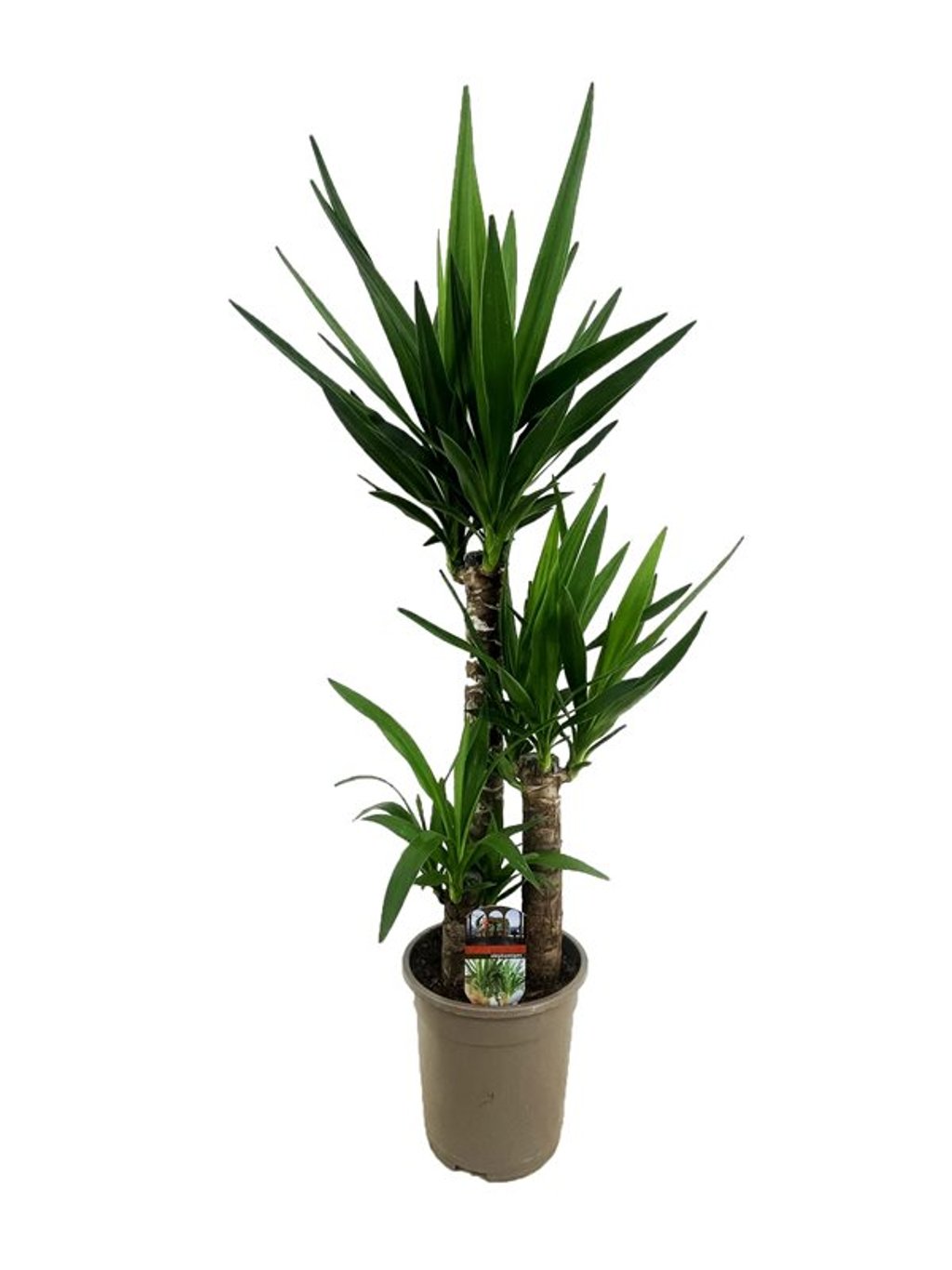

Yucca elephantipes p21 60 30 20cm stems

39.99

Yucca elephantipes, also known as the spineless yucca or elephant’s foot, is a popular, easy-to-care-for houseplant known for its bold, sword-shaped leaves and chunky trunk. It is a drought-tolerant, sun-loving plant that is generally low maintenance.

1 in stock

Category:
Key Characteristics
  • Appearance: Features a thick, "elephant's foot"-like trunk that stores water and arching, mid-green, sword-like leaves that lack sharp spines, distinguishing it from other Yucca species.
  • Size: As an indoor plant, it is slow-growing and typically reaches 1 to 2 meters in height, though in its native Central and South American habitat it can grow up to 10 meters.
  • Flowers: Mature outdoor plants may produce bell-shaped, cream-colored flowers on a tall stalk in late summer, but this is rare for indoor specimens.
  • Toxicity: The plant is considered mildly toxic to pets (cats and dogs) if ingested, so it is recommended to keep it away from animals and small children.
  • Air Quality: It is known for its air-purifying qualities, helping to filter out indoor toxins.
Care and Growing Tips
  • Light: Prefers bright, indirect light indoors but can tolerate some direct sunlight (especially in a south-facing window in winter). Acclimatize gradually to intense sun to prevent leaf burn.
  • Watering: It is important to avoid overwatering, as the plant stores water in its trunk and is prone to root rot. Water deeply only when the top half (or the entirety) of the soil has dried out, and water more sparingly in winter. Ensure the pot has good drainage and never let the plant sit in standing water.
  • Soil: Use a well-draining soil mix, such as a cacti and succulent compost or regular potting soil mixed with sand or perlite, to ensure proper drainage.
  • Temperature & Humidity: Thrives in normal household temperatures (15-28°C or 60-80°F) and low humidity levels. Avoid cold drafts.
  • Feeding: Feed with a half-strength liquid houseplant fertilizer once a month during the active growing season (spring and summer). Do not fertilize in winter.
  • Pruning: Remove dead or yellowing lower leaves as part of the natural growth process. If the plant gets too tall, you can cut the trunk down to a desired height in spring, and the top portion can be used for propagation.
Key Characteristics
  • Appearance: Features a thick, “elephant’s foot”-like trunk that stores water and arching, mid-green, sword-like leaves that lack sharp spines, distinguishing it from other Yucca species.
  • Size: As an indoor plant, it is slow-growing and typically reaches 1 to 2 meters in height, though in its native Central and South American habitat it can grow up to 10 meters.
  • Flowers: Mature outdoor plants may produce bell-shaped, cream-colored flowers on a tall stalk in late summer, but this is rare for indoor specimens.
  • Toxicity: The plant is considered mildly toxic to pets (cats and dogs) if ingested, so it is recommended to keep it away from animals and small children.
  • Air Quality: It is known for its air-purifying qualities, helping to filter out indoor toxins.
Care and Growing Tips
  • Light: Prefers bright, indirect light indoors but can tolerate some direct sunlight (especially in a south-facing window in winter). Acclimatize gradually to intense sun to prevent leaf burn.
  • Watering: It is important to avoid overwatering, as the plant stores water in its trunk and is prone to root rot. Water deeply only when the top half (or the entirety) of the soil has dried out, and water more sparingly in winter. Ensure the pot has good drainage and never let the plant sit in standing water.
  • Soil: Use a well-draining soil mix, such as a cacti and succulent compost or regular potting soil mixed with sand or perlite, to ensure proper drainage.
  • Temperature & Humidity: Thrives in normal household temperatures (15-28°C or 60-80°F) and low humidity levels. Avoid cold drafts.
  • Feeding: Feed with a half-strength liquid houseplant fertilizer once a month during the active growing season (spring and summer). Do not fertilize in winter.
  • Pruning: Remove dead or yellowing lower leaves as part of the natural growth process. If the plant gets too tall, you can cut the trunk down to a desired height in spring, and the top portion can be used for propagation.