Wisteria sinensis

28.95

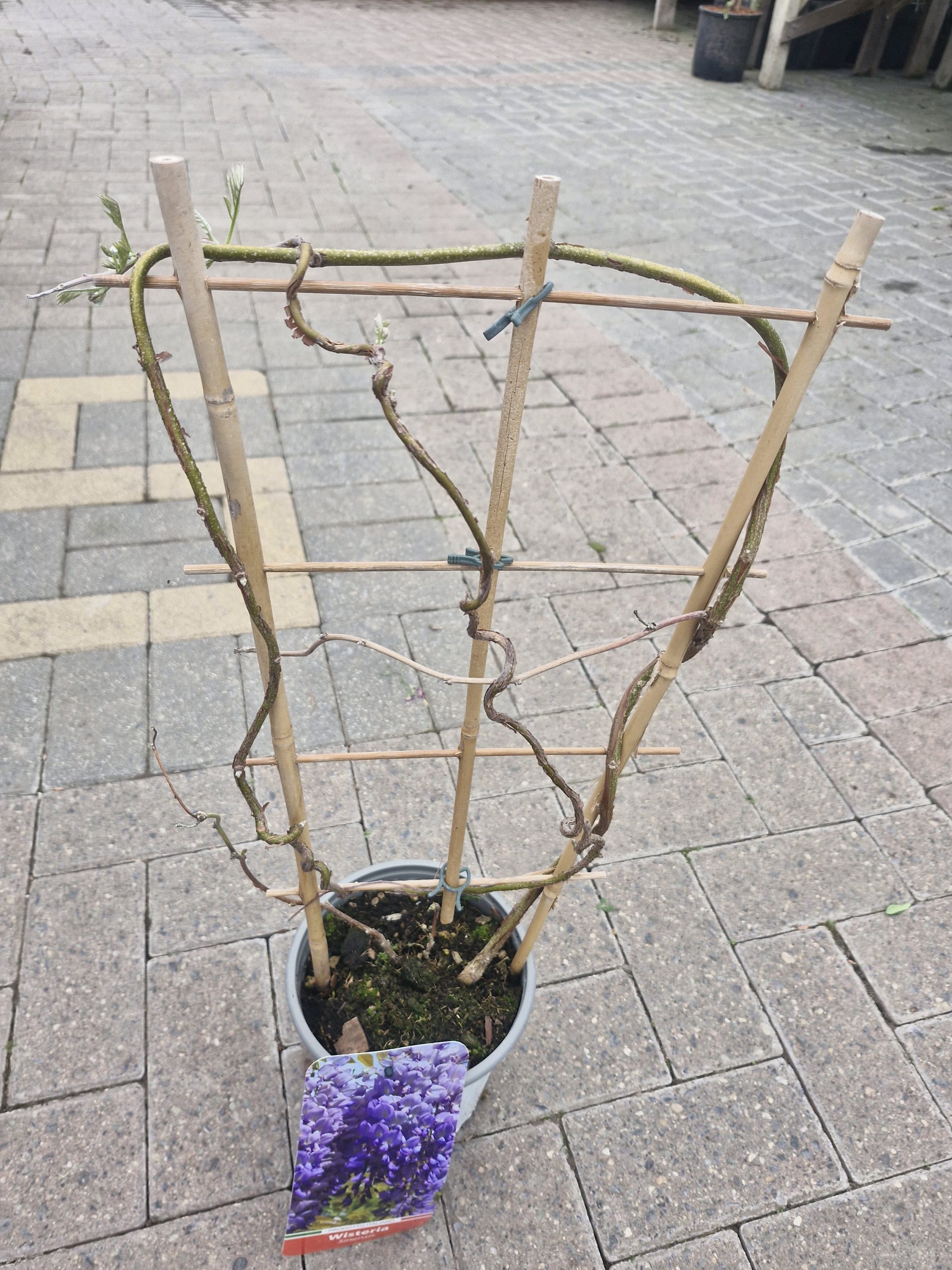
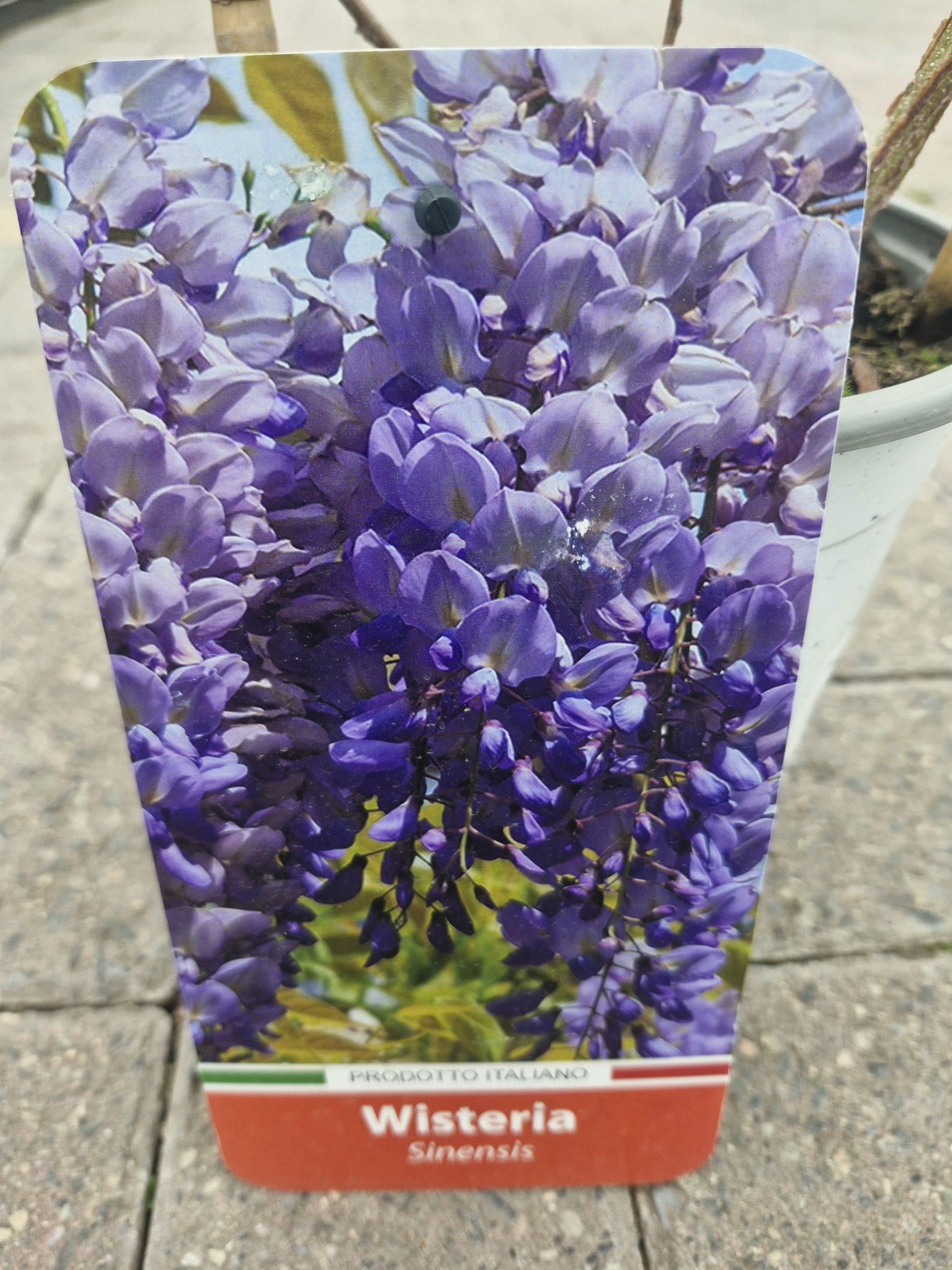
Wisteria sinensis, commonly known as Chinese Wisteria, is a vigorous, deciduous climbing vine celebrated for its dramatic cascades of fragrant, pea-like flowers that appear in late spring before its leaves emerge. Native to China, it is a long-lived plant that can reach heights of over 12 metres (40 feet) and is known for its thick, gnarled woody stems that twine in an anticlockwise direction.
Key Characteristics
  • Flowers: Drooping clusters (racemes) typically 15–30 cm long, appearing in shades of lilac, mauve, violet-blue, or white. They open nearly all at once for a spectacular display and have a sweet, grape-like scent.
  • Foliage: Large pinnate leaves consisting of 7–13 leaflets. They often emerge with a bronze tinge before turning bright green in summer and yellow in autumn.
  • Growth Habit: Extremely fast-growing and aggressive. It requires sturdy, permanent support as mature vines can become heavy enough to damage weak structures.

1 in stock

Growing & Care Requirements
To thrive and ensure reliable flowering, Chinese Wisteria needs specific conditions:
  • Sunlight: Prefers full sun (at least 6 hours) for the best flower production. It can tolerate partial shade, but this often leads to fewer blooms.
  • Soil: Flourishes in moist, fertile, and well-drained soil. It is relatively adaptable but avoids waterlogged or extremely dry sandy sites.
  • Support: Needs a strong framework like a pergola, sturdy trellis, or galvanized wires attached to a house wall.
  • Pruning (Twice Yearly): Essential to control size and encourage flower buds:
    • Summer (July/August): Cut back long, "whippy" green shoots to about five or six leaves.
Growing & Care Requirements
To thrive and ensure reliable flowering, Chinese Wisteria needs specific conditions:
  • Sunlight: Prefers full sun (at least 6 hours) for the best flower production. It can tolerate partial shade, but this often leads to fewer blooms.
  • Soil: Flourishes in moist, fertile, and well-drained soil. It is relatively adaptable but avoids waterlogged or extremely dry sandy sites.
  • Support: Needs a strong framework like a pergola, sturdy trellis, or galvanized wires attached to a house wall.
  • Pruning (Twice Yearly): Essential to control size and encourage flower buds:
    • Summer (July/August): Cut back long, “whippy” green shoots to about five or six leaves.