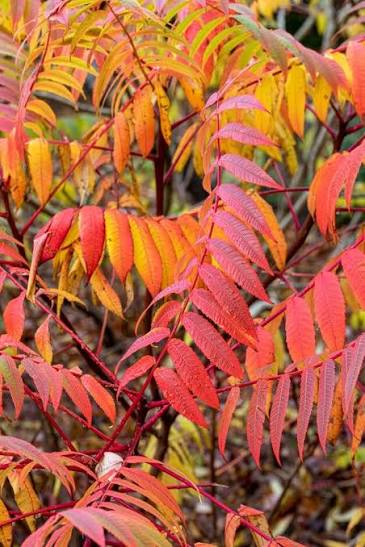
Rhus Typhina 10ltr

€29.99

Rhus typhina, commonly known as staghorn sumac or stag’s horn sumach, is an upright, multi-stemmed deciduous large shrub or small tree celebrated for its dramatic tropical-looking foliage and fiery autumn colour displays. Native to eastern North America, it is highly valued as a hardy specimen plant in Irish and UK gardens. It gets its distinctive name from its thick, widely forking branches covered in velvety, rust-coloured brown hairs that closely resemble deer antlers “in velvet”.

Key Characteristics & Seasonal Interest

  • Foliage: Large, pinnately compound leaves featuring 9–31 narrow, serrated leaflets. Cultivars like Rhus typhina ‘Dissecta’ and ‘Tiger Eyes’ offer deeply cut, fern-like leaves. 
  • Autumn Colour: The foliage undergoes a spectacular transformation in early autumn, shifting to vibrant, glowing shades of yellow, brilliant orange, and intense crimson red. 
  • Flowers & Fruit: In summer (June to July), it bears dense, upright, candle-like panicles of greenish-yellow flowers. On female plants, these mature into conical, velvety crimson fruit heads that persist through the winter, providing excellent architectural structure and vital food for birds.

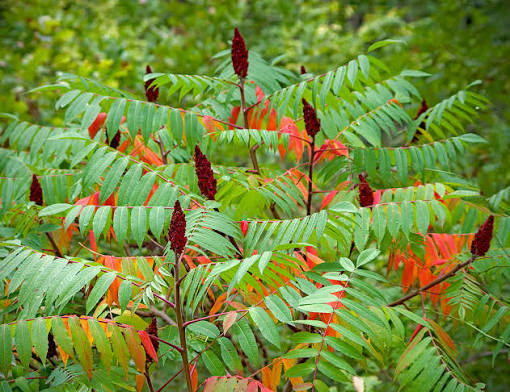
3 in stock

Cultivation & Garden Care

  • Position: It thrives best in full sun to achieve its most intense autumn colours, though it tolerates light partial shade. It is exceptionally hardy throughout Ireland and the UK.
  • Soil Requirements: Highly adaptable, it grows well in virtually all well-drained soil types (sand, clay, loam, chalk) and easily tolerates nutrient-poor or dry soils, though it dislikes permanently wet, waterlogged conditions.
  • Growth & Maintenance: It has a fast-growing, spreading habit, typically reaching heights of 3–6 metres and a spread of 4–8 metres